
Good Design Is Invisible
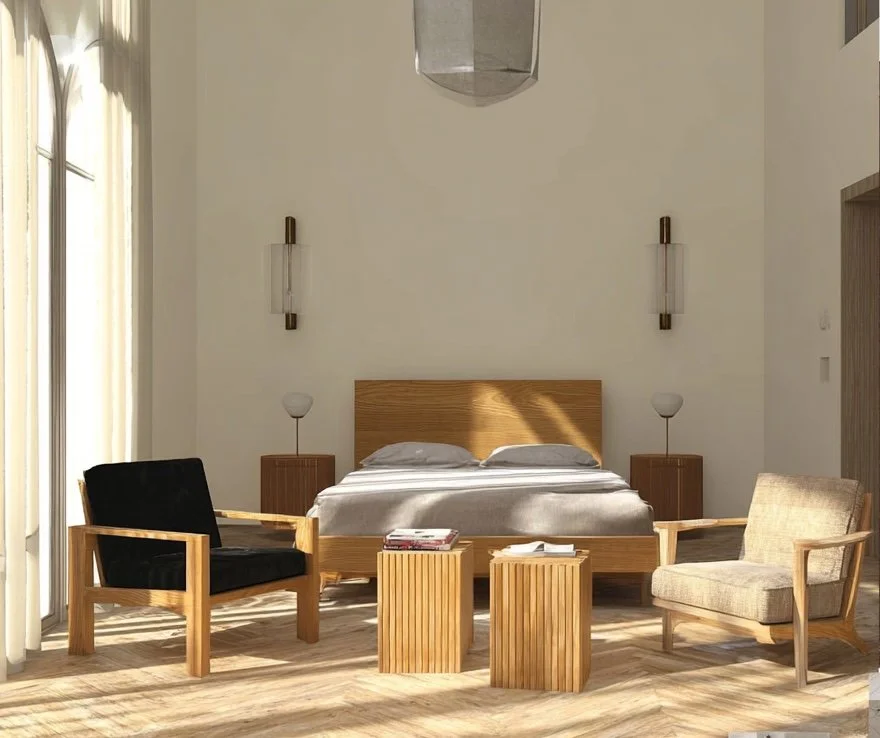
The best-designed rooms often look effortless.
Nothing feels forced.
The furniture sits naturally in the space.
The lighting falls where it should.
The joinery feels as though it has always belonged there.
The circulation works.
The room feels calm.
And because everything works so well, you barely notice the decisions behind it.
That is the strange thing about good design.
A lot of the work disappears.
The things you notice are rarely the hardest decisions
When you walk into a finished room, you might notice the kitchen.
The sofa.
The colour.
The stone.
The pendant light.
The artwork.
Those are the visible parts.
But underneath them sit dozens of smaller decisions that are far less obvious.
Where exactly should the pendant sit?
How much space should there be around the dining table?
Can the drawers open fully?
Where does the curtain stack back?
Will the sofa block the radiator?
Does the skirting continue behind the joinery?
Where should the sockets go so they are actually useful?
What can you see from the adjoining room?
None of these questions sounds particularly glamorous.
But together, they shape how the room feels.
Good design removes friction
I think one of the most useful ways to describe good design is that it removes small points of irritation.
You do not have to walk around the table awkwardly.
You do not have to stretch behind the sofa to find a socket.
The light switch is where your hand expects it to be.
The kitchen island does not interrupt the route through the room.
The curtains open properly.
The storage is where you need it.
You might not consciously think:
This room has excellent circulation.
You just feel comfortable in it.
That is the point.
The layout comes before the styling
A lot of interiors content understandably focuses on the most visual decisions.
Colour palettes.
Furniture.
Materials.
Finishing touches.
But those things work best when the underlying room has already been resolved.
A beautiful sofa cannot fix a poor layout.
An expensive light cannot compensate for the wrong position.
A lovely kitchen finish will not make a badly planned kitchen function properly.
The most successful projects tend to begin with questions that are much less photogenic.
How do people move through the room?
Where do they sit?
What needs to be stored?
How does one space connect to the next?
What needs to happen first?
Once those decisions are right, the aesthetic layer becomes much easier.
The most successful details are often the ones nobody comments on
Some of the best design decisions will never be noticed by anyone visiting the house.
A socket moved 200mm.
A wall light aligned with a bedside table.
A cabinet depth adjusted by a few centimetres.
A doorway widened slightly.
A pendant moved off-centre in the room so it sits correctly over the table.
A radiator repositioned so the furniture layout works.
Nobody walks into the finished room and says:
I love what you did with that socket.
But they might say:
This room just feels really good.
And that is usually the result of dozens of those invisible decisions working together.
Simplicity usually requires more thought, not less
There is a misconception that a simple room is easier to design.
Often, it is the opposite.
When a space is visually quiet, every proportion matters more.
The placement of lighting matters more.
The transitions between materials matter more.
The relationship between furniture and architecture matters more.
There are fewer things to distract from something being slightly off.
A room that feels effortless has usually had a lot of effort put into it.
You just are not supposed to see it.
Good design also protects the bigger idea
Interior design is not only about getting individual details right.
It is about making sure they all support the same overall intention.
A project might start with a clear concept.
Warm.
Quiet.
Characterful.
Practical.
Then reality arrives.
Budgets change.
Products become unavailable.
Site dimensions shift.
A contractor needs an answer.
A delivery is delayed.
A technical issue appears.
Good design is being able to respond to all of those changes without losing what the room was meant to feel like.
That is another part of the process that rarely appears in the final photograph.
But it matters enormously.
The finished room should feel obvious
One of my favourite reactions to a completed project is when the space feels as though it could not really have been arranged any other way.
The table naturally sits there.
The joinery belongs on that wall.
The lighting makes sense.
The colours feel settled.
The room feels like itself.
That sense of inevitability is not accidental.
It is usually the result of making hundreds of decisions carefully enough that, in the end, they disappear.
Because good interior design is not about showing you how much design has happened.
It is about making the room feel completely natural.
And often, the better the design is, the less you notice it.