
Interior Design Is Hundreds of Connected Decisions
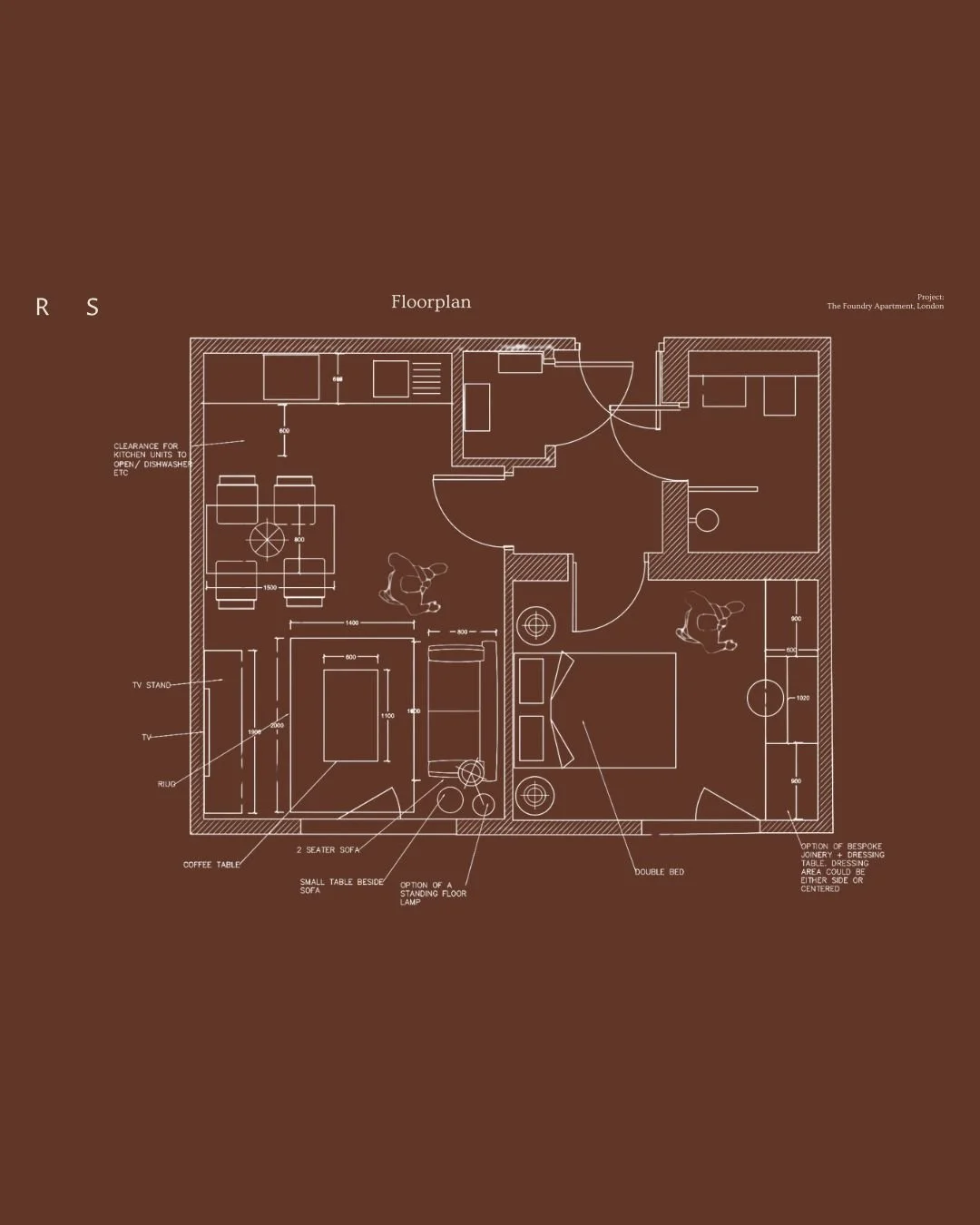
When people think about interior design, they often imagine the visible decisions.
The kitchen colour.
The sofa.
The flooring.
The lighting.
The paint.
And of course, those things matter.
But the part of interior design that usually has the biggest impact on the final result is much less obvious.
It is the hundreds of decisions that sit underneath the finished room — and, more importantly, how all of those decisions connect.
A renovation is rarely a series of isolated choices.
Move one thing, and another thing changes.
Change the layout, and the lighting may need to move.
Change the lighting, and the furniture arrangement might need to shift.
Add bespoke joinery, and suddenly sockets, skirting, radiators, handles, clearances and wall lights all become part of the same conversation.
The value of good interior design is not just making beautiful choices.
It is making all of those choices work together.
The kitchen colour is probably decision number 47
Clients understandably want to start with the enjoyable bits.
What colour should the cabinets be?
Which stone do we like?
What tile works best?
Which handles feel right?
But before any of those decisions really mean anything, there are usually much bigger questions to answer.
Does the kitchen layout actually work?
Where will people naturally walk?
How much clearance do we need around the island?
Where will the bins live?
Where will small appliances be stored?
Do we need more sockets?
Where should the task lighting fall?
How does the kitchen connect to the dining area?
What can be seen from the next room?
The cabinet colour may be the most visible decision.
But it is almost never the first one.
One change rarely stays in one place
This is where whole-house renovations become more complicated.
A decision that sounds simple can quickly affect several parts of the project.
Imagine widening an opening between the kitchen and dining room.
That one change may affect:
structural work;
flooring;
ceiling details;
lighting;
heating;
furniture placement;
cabinetry;
sightlines;
decorating;
electrical positions.
What looked like one decision has suddenly become ten.
And all ten need to support the original idea.
This is why interior design is not simply about choosing things that look good individually.
It is about understanding how one decision influences everything around it.
The order matters too
You can make the right decision at the wrong time.
And it can still create problems.
A sofa might be perfect for the room, but if it is ordered before the final doorway position is agreed, it may no longer fit comfortably.
A pendant might be beautiful, but if the electrical first fix has already happened, moving it later becomes more disruptive and expensive.
A flooring choice may seem straightforward until you realise it needs to transition into two adjoining rooms at different levels.
A piece of joinery may look simple on paper, but then needs to account for sockets, skirting, wall lights and access panels.
A good design process is not just about deciding what you want.
It is about knowing what needs to be decided now, what depends on it and what can safely wait.
A moodboard is only the beginning
Moodboards are valuable.
They help establish the atmosphere, palette and overall direction of a room.
But they do not solve the practical questions.
They cannot tell you if the dining table has enough clearance around it.
They cannot tell the electrician where the wall lights should go.
They cannot resolve the junction between new joinery and existing cornicing.
They cannot tell you whether a sofa blocks the radiator.
They cannot coordinate what the kitchen supplier needs from the contractor, or what the joiner needs from the electrician.
The visual idea matters.
But translating that idea into a home that works requires another level of detail entirely.
Good design often looks simple because the complicated thinking happened beforehand
The most successful rooms often feel effortless.
The cabinet fits perfectly into the alcove.
The pendant sits exactly where it should.
The furniture feels naturally positioned.
The lighting works.
The circulation feels easy.
Nothing looks forced.
That simplicity is rarely accidental.
It is usually the result of someone asking a slightly ridiculous number of questions before anything was built.
How far does this door swing?
Can the drawer open fully?
Will the curtains stack properly?
Where does the cable go?
Does the bedside table sit underneath the switch?
Does the skirting continue behind the joinery?
Which way should the floorboards run?
What happens when the furniture is actually in the room?
Individually, these details can seem small.
Together, they determine whether a room feels properly resolved.
The expensive mistakes are often surprisingly minor
Not every mistake is dramatic.
Sometimes it is a socket in the wrong place.
A pendant centred on the room instead of the dining table.
Curtains that cannot stack back properly.
A sofa that is slightly too deep.
A radiator placed exactly where the only sensible piece of furniture needs to go.
An island that leaves too little room to move comfortably.
None of these things is catastrophic.
But correcting them costs time and money.
And living with them is irritating.
A large part of good design is catching those problems before they become physical.
Full interior design is as much about coordination as creativity
This is one of the biggest differences between design consultancy and a fully managed interior design project.
With consultancy, a client may want creative direction and a clear plan, then feel comfortable implementing the scheme themselves.
With full interior design, the designer stays involved as all of those decisions begin interacting with:
contractors;
suppliers;
budgets;
lead times;
site conditions;
technical drawings;
procurement;
installation.
Something changes on site.
A product becomes unavailable.
A dimension is slightly different.
A contractor needs an answer.
A delivery date moves.
The design has to adapt without losing the overall intention.
That is where much of the value lies.
Not simply in choosing the beautiful thing.
But in protecting the original idea through everything that happens between concept and completion.
The finished room is the result of the decisions you cannot see
When a renovation is finished, most people notice the obvious things first.
The kitchen.
The furniture.
The colour.
The lighting.
The joinery.
They probably will not notice that a socket moved 200mm so the cabinetry could work properly.
Or that the dining table shifted slightly to improve the route through the room.
Or that several flooring options were rejected because one transition detail was going to look awkward.
And that is exactly the point.
Good design should feel natural.
The decisions disappear into the room.
A successful renovation is rarely one brilliant idea.
It is hundreds of connected decisions, made carefully enough that the finished home feels effortless.