
The Case for a Little Imperfection
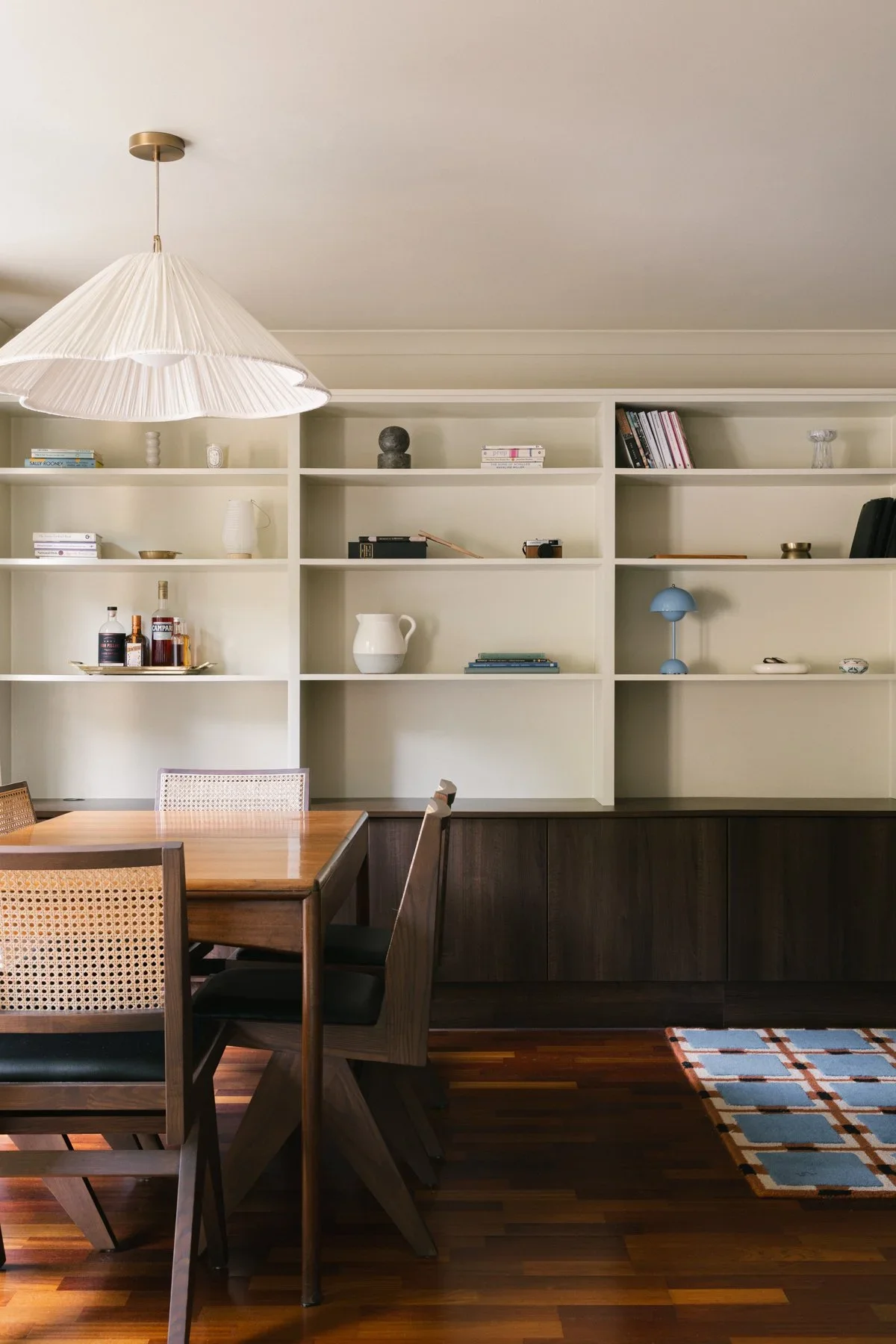
There is something slightly strange happening in interiors at the moment.
For years, the goal seemed to be perfection.
Perfectly smooth walls. Perfectly matched furniture. Perfectly styled shelves. New kitchens that looked untouched. Homes where every finish was crisp, every object was intentional and almost nothing suggested that somebody actually lived there.
And I think we are finally getting a little tired of it.
The homes I am most drawn to now tend to have something less polished about them.
A vintage table with a few marks.
Timber that shows its grain.
Handmade tiles that are not completely uniform.
An old piece of furniture sitting alongside something contemporary.
Glass with texture rather than absolute clarity.
Art that has been collected rather than coordinated.
They feel finished, but not flawless.
And I think that distinction matters.
Perfect can feel strangely impersonal
There is nothing wrong with precision.
Good craftsmanship matters. Details matter. A badly fitted kitchen does not suddenly become charming because we decide imperfection is fashionable.
But there is a difference between something being well made and something being so polished that it has lost all sense of character.
When every surface is new, every piece is from the same collection and every finish is perfectly matched, a room can start to feel more like a showroom than a home.
The spaces that stay with me usually have a little tension in them.
Something old against something new.
Something refined next to something slightly rustic.
A beautifully made piece of joinery beside an antique chair that has already had a life.
Those contrasts stop a room feeling overly designed.
Character usually comes from things that cannot be replicated perfectly
One of the reasons older homes are so compelling is that they already contain layers.
Original floorboards have variation.
Plaster is not always completely straight.
Stone has marks.
Timber changes colour.
Fireplaces have been used.
Doors have been painted many times.
Those details tell you that the house existed before you arrived.
And while renovation inevitably involves making things better, I do not think the goal should always be to remove every trace of that history.
Sometimes the best decision is to restore rather than replace.
Sometimes it is to leave a little irregularity.
Sometimes it is simply to allow an old element to sit comfortably beside something much newer.
A home does not become more beautiful by erasing everything that came before.
Handmade changes the feeling of a room
I think this is part of why there is such renewed interest in craft and handmade materials.
A hand-glazed tile catches light differently from one tile to the next.
A woven textile has texture you can actually see.
A hand-thrown lamp has tiny variations in its form.
A piece of timber furniture develops marks and patina rather than simply deteriorating.
Those small inconsistencies give a room depth.
They remind you that somebody made the object.
That feels particularly appealing in a world where so much of what we see is increasingly automated, standardised and frictionless.
There is something reassuring about an object that shows evidence of the person who created it.
New does not have to look brand new
This is something I think about a lot during renovations.
A successful new addition should not necessarily announce itself as the newest thing in the house.
A kitchen can be completely new but still feel sympathetic to the architecture.
Joinery can be designed carefully enough that it appears to belong.
New furniture can sit beside vintage pieces without either feeling out of place.
Materials can be chosen because they will age well rather than because they look immaculate on installation day.
I love when a newly completed room feels as though it has already settled into the house.
That is very different from trying to make everything look old.
It is simply about allowing the new and existing parts of the home to have a conversation with each other.
Patina is not the same as neglect
There is obviously a line.
Nobody needs to romanticise damaged plumbing or poorly maintained flooring.
The interesting part is deciding what deserves repairing, what needs replacing and what has become more beautiful through age.
A scratched old table might be wonderful.
A leaking tap is simply a leaking tap.
An original timber floor with variation may be worth saving.
Floorboards that are structurally unsound need attention.
Good design is partly knowing the difference.
A home should have somewhere to go
Perhaps the thing I like most about slightly imperfect interiors is that they leave space for the home to evolve.
You can add another painting.
Bring back something from a trip.
Replace a chair years later.
Inherit a piece of furniture.
Allow materials to age.
The home does not become “wrong” because something changes.
That is difficult to achieve when everything has been designed to create one absolutely perfect finished image.
I do not think the best homes are ever completely finished.
They accumulate.
They change.
They get a little marked.
They reflect the people who live there.
And that is usually what makes them interesting.
Perfection photographs beautifully.
But character is what makes you want to stay.